The Auctores
A full-stack business platform for a virtual admin company, with a white-labelled AI sales agent that qualifies leads, plants conversion seeds, and logs structured sales intelligence to a CRM automatically.
Role: Solo Builder & Designer : full-stack architecture, Sanity CMS integration, Supabase setup, ClickUp API client dashboard, GPT sales agent design and prompt engineering, Google Sheets CRM pipeline, UI/UX design
Overview
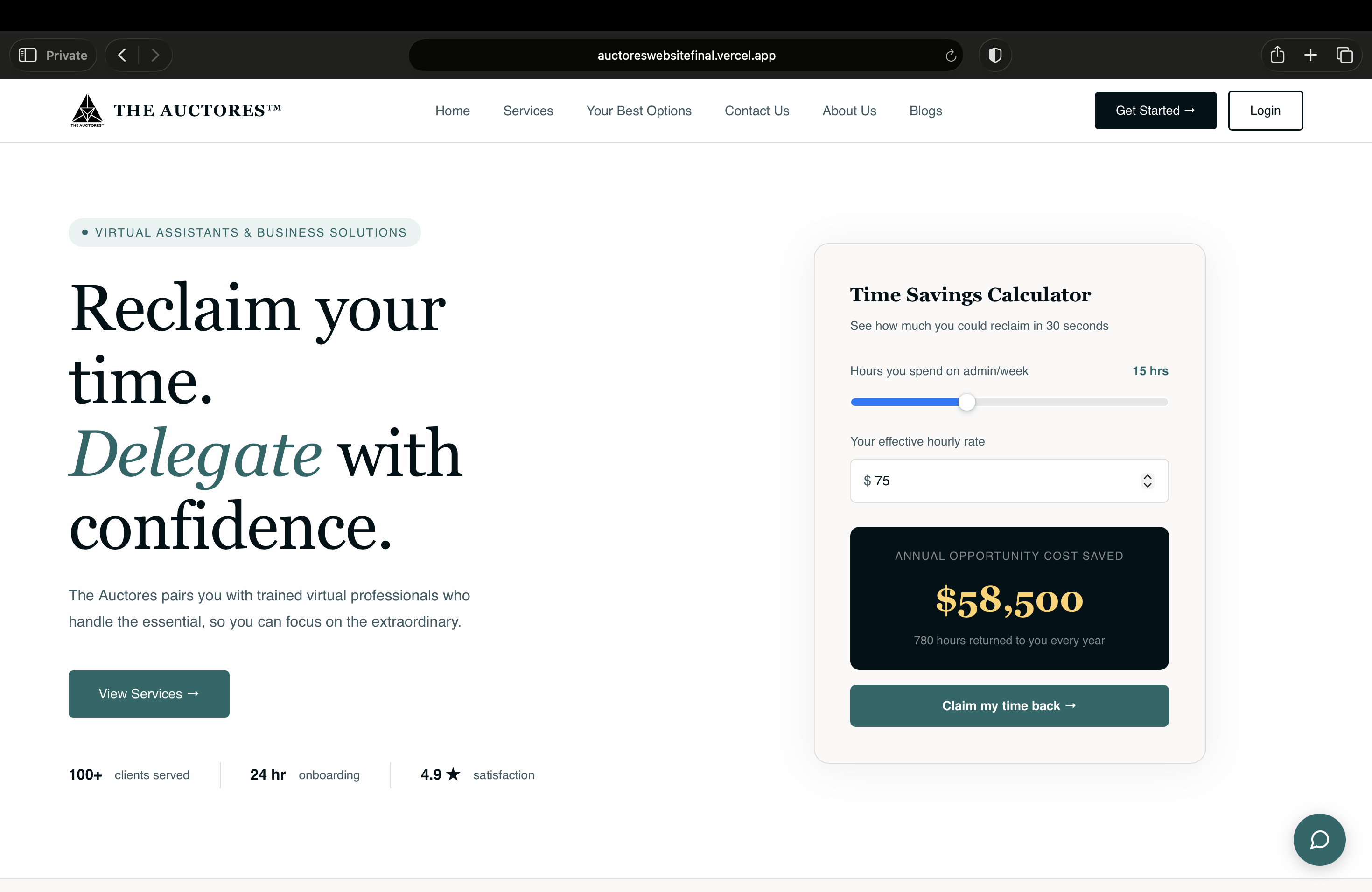
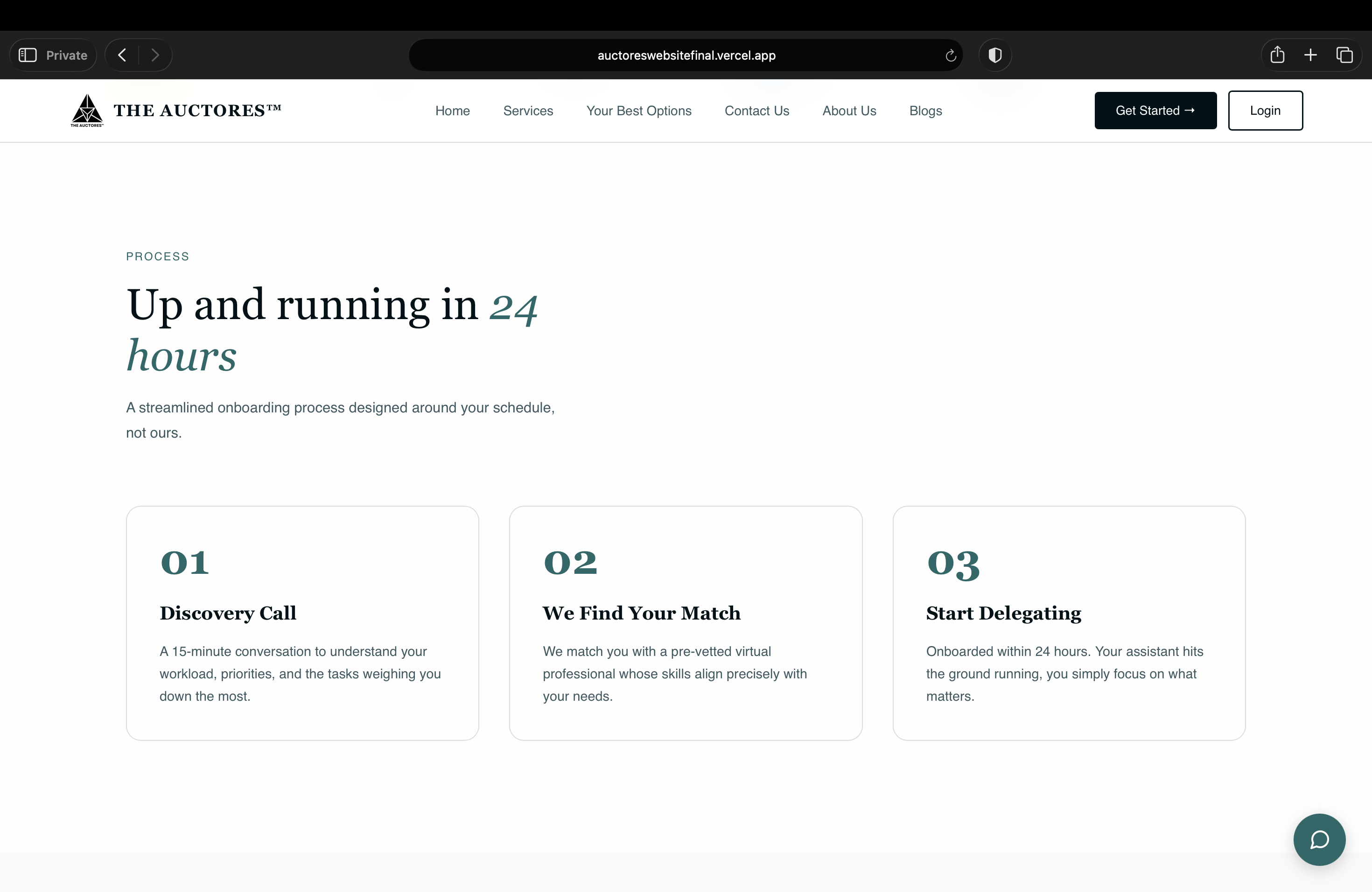
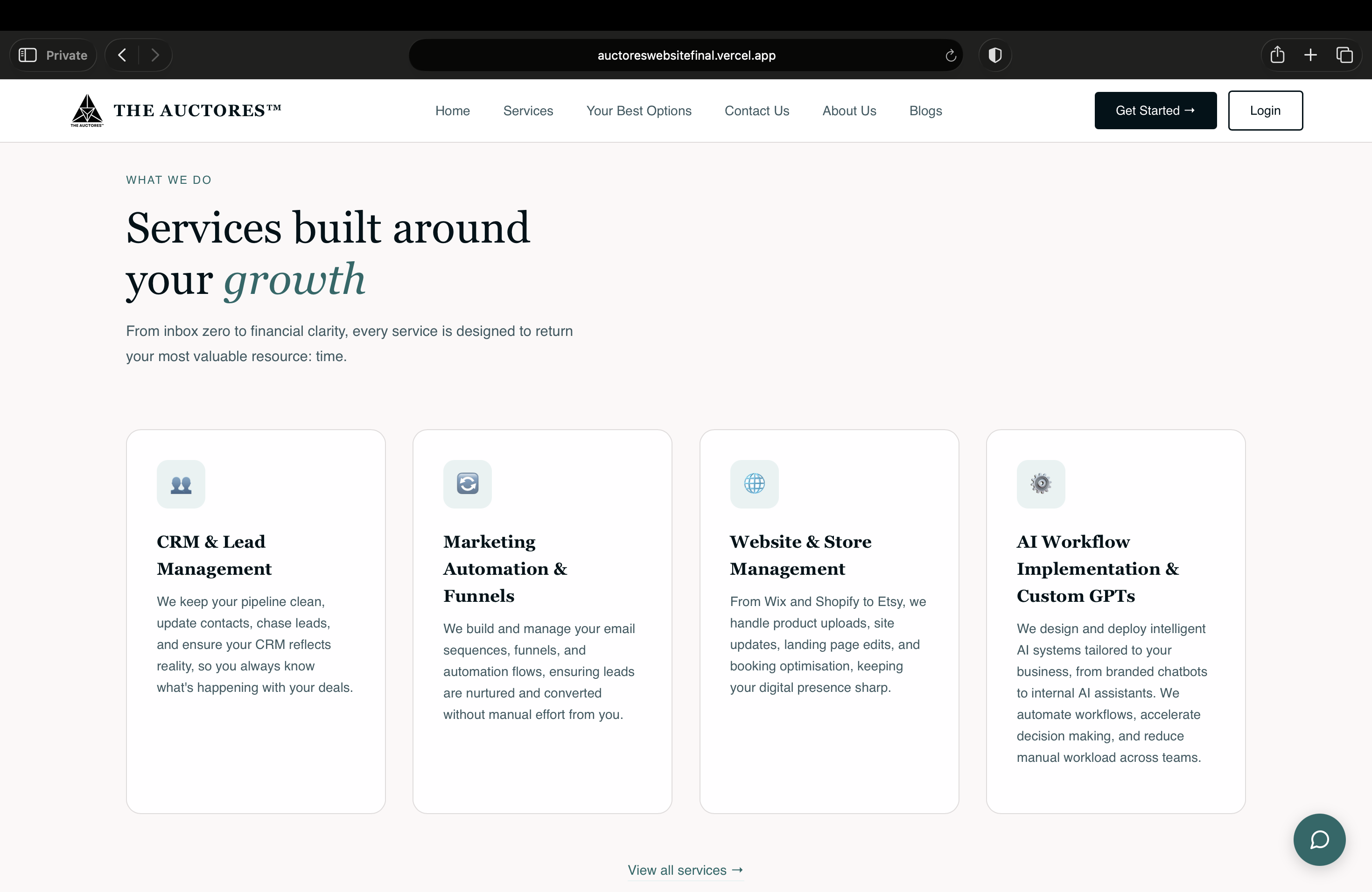
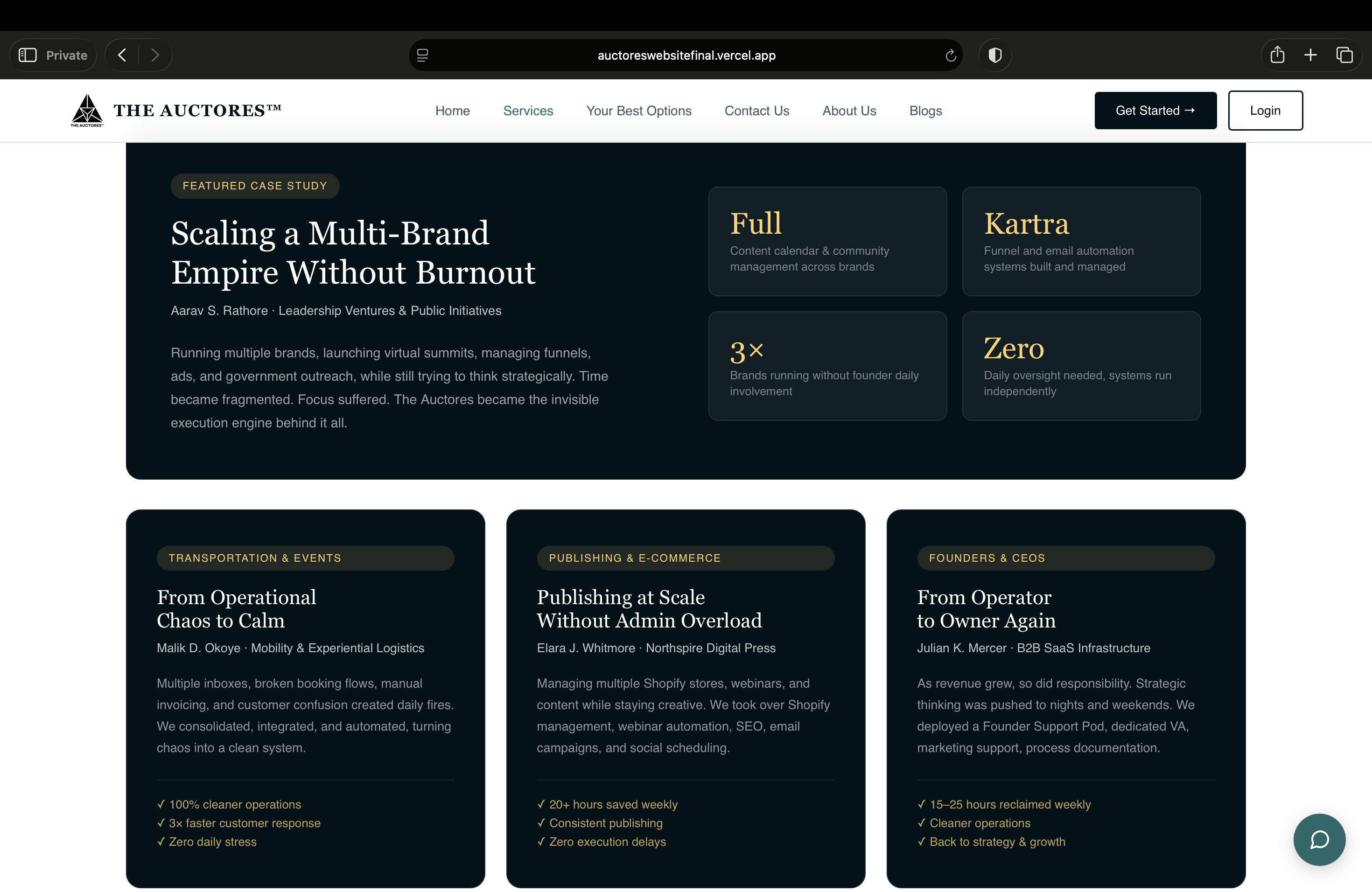
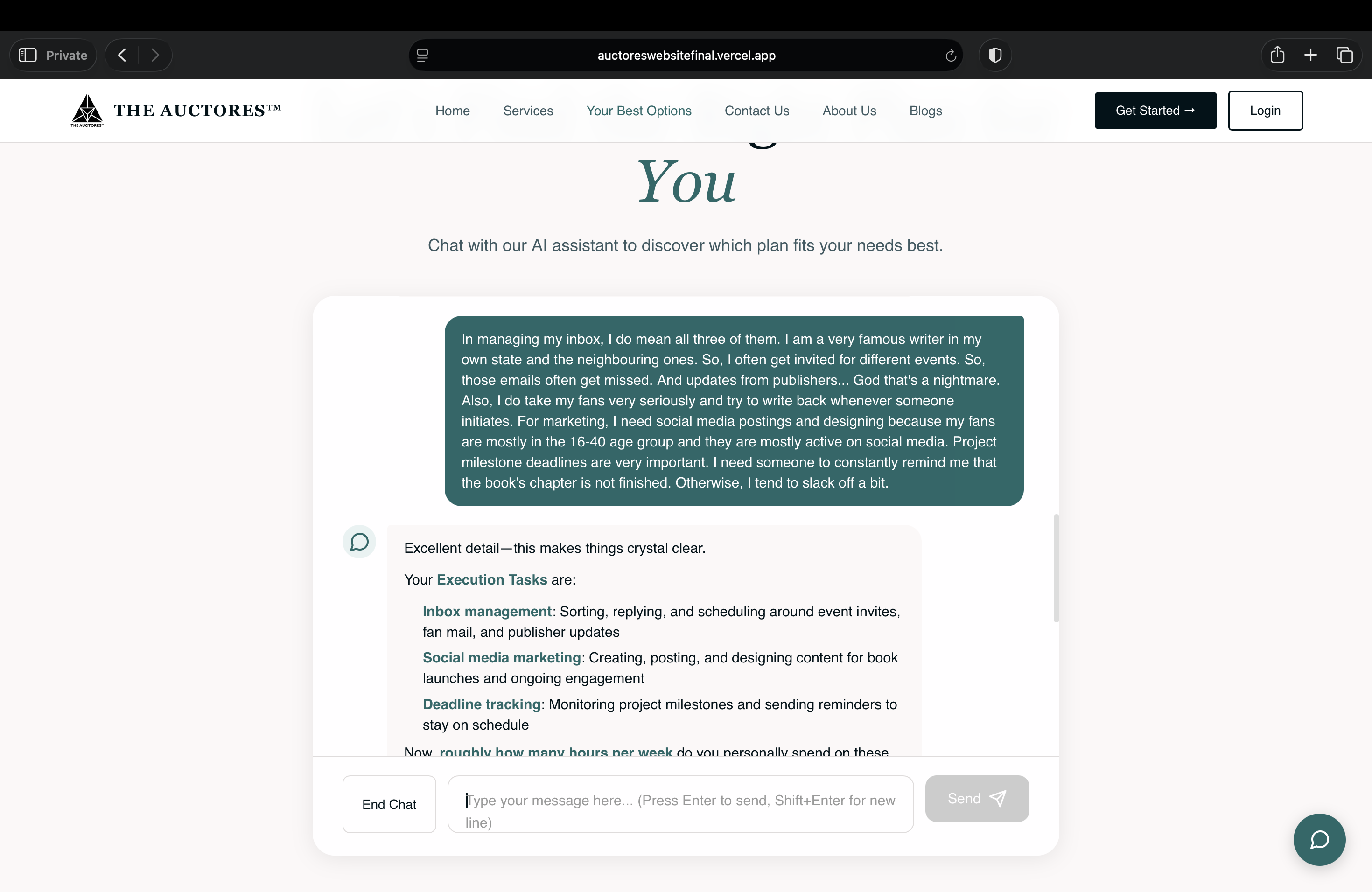
The Auctores is a virtual admin company that handles the day-to-day operational load businesses can't afford to ignore but don't have time to manage. The social media, inbox management, accounts, scheduling, and more. Their website needed to do more than look good. It needed to convert. Built on Next.js with Sanity CMS for blogs, Supabase for database management, a ClickUp-integrated client dashboard, and a white-labelled GPT-powered sales agent that qualifies every visitor as a lead automatically logging structured sales intelligence to a Google Sheet CRM the moment the conversation ends.
The Problem
A virtual admin company lives and dies by its ability to make potential clients feel understood quickly. Most service business websites fail at this. They list features, show pricing, and hope the visitor figures out whether they need the service. The Auctores needed something that actively engaged visitors, helped them understand their own pain points, and moved them toward a buying decision, without requiring a human sales rep to be available 24/7. The solution wasn't a chatbot. It was a psychologically calibrated AI sales agent designed to feel like a helpful advisor while doing the work of a trained sales professional.
How It Was Built
The Auctores offers something genuinely hard to explain quickly: a virtual admin service that replaces the need for a full-time secretary or operations person. Social media management, inbox handling, accounts, scheduling, client communication — all handled remotely by a dedicated virtual admin.
The challenge with selling this kind of service is that most potential clients don't know they need it until someone walks them through exactly how much time they're losing to administrative tasks every week. That realisation can't come from a pricing table. It has to come from a conversation.
The website needed to have that conversation at scale, at any hour, without a human on the other end.
The Platform — Four Layers
| Layer | What It Does |
|---|---|
| Public-Facing Website | Next.js site with services pages, pricing plans, and about section — built to establish credibility before the visitor engages with the agent |
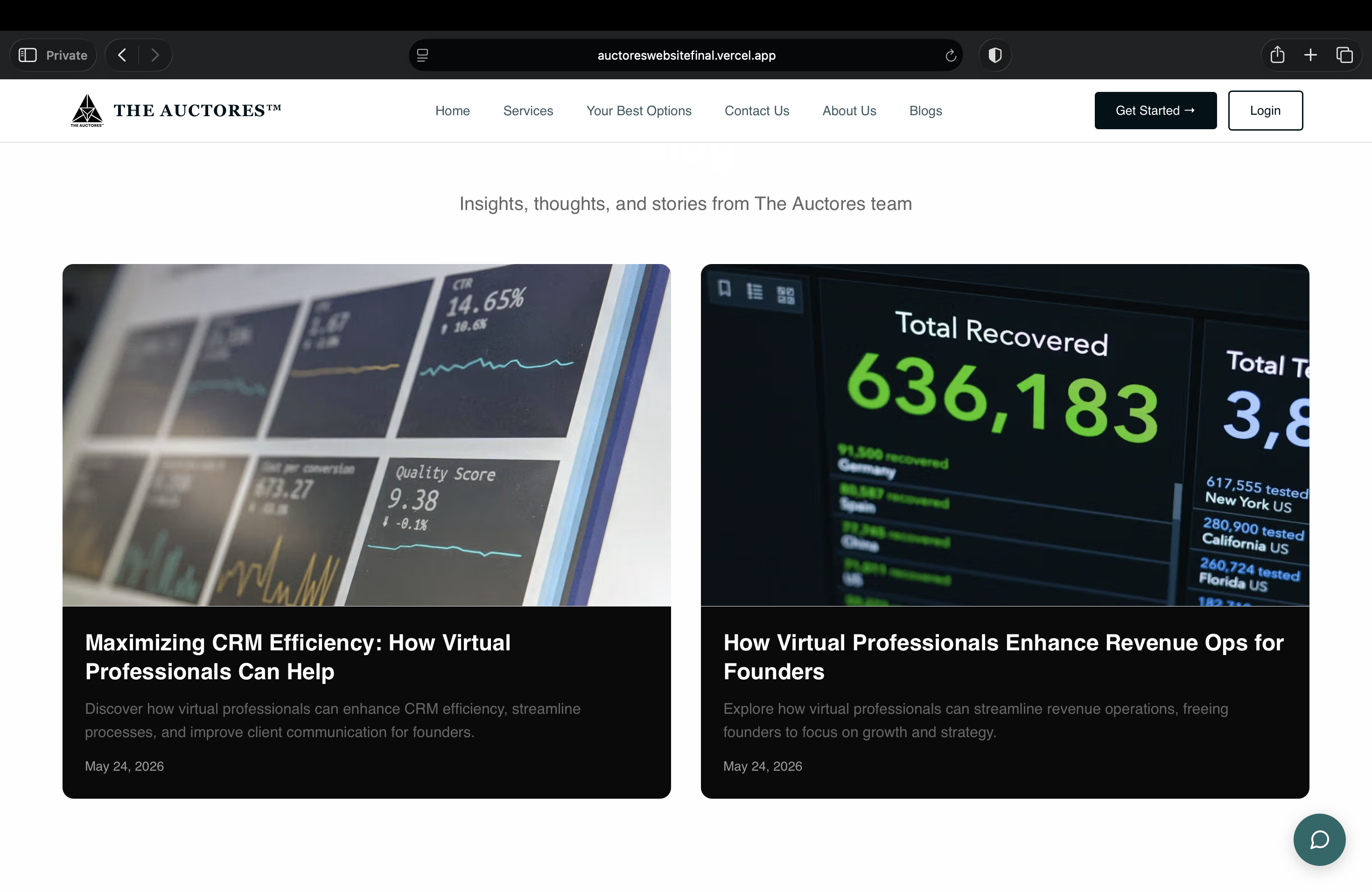
| Blog System | Sanity CMS gives the team a clean editorial interface to publish and manage blog posts without touching code — content changes go live instantly, no redeployment |
| Client Dashboard | Existing clients see real-time task and deliverable updates pulled live from the company's ClickUp via API — RBAC-gated, only the owner can add or modify client accounts |
| AI Sales Agent | A fully engineered sales qualification system — the part of the project that went well beyond the original contract |
The AI Sales Agent
The client asked for a chatbot that could talk to visitors. What they got was a fully engineered sales qualification system — and that distinction matters.
The agent is white-labelled, presenting as The Auctores' own assistant with no visible branding of the underlying technology. Its responses are not generic. They are psychologically calibrated through careful prompt engineering to do three specific things.
Objective 1 — Make the visitor feel understood
The agent asks questions that surface the visitor's actual operational pain: how much time they spend on emails, whether they've ever missed something important because their inbox was unmanaged, what their business would look like with five extra hours per week. These are not sales questions. They feel like empathy.
Objective 2 — Plant a seed even when the visitor doesn't convert
After 5–6 message exchanges, even a visitor who decides not to buy a plan has been walked through a mental picture of their business running more smoothly with a virtual admin. That seed doesn't disappear when they close the tab. It was always part of the design.
Objective 3 — Qualify the visitor as a lead
Budget range, timeline, use case, business type, urgency signals — all gathered naturally through conversation, never through a form.
The CRM Pipeline — Fully Automated
When the visitor ends the conversation, the agent's work is done. That is when the second system activates.
| Step | What Happens |
|---|---|
| Conversation ends | A separate GPT-4o-mini instance reads the entire transcript |
| Extraction | Structured sales intelligence extracted: budget range, timeline, use case, lead temperature, recommended follow-up action |
| Output | A clean row written to a Google Sheet functioning as a live sales CRM |
The result: every conversation, regardless of outcome, becomes a sales asset. The team wakes up every morning to a spreadsheet of overnight conversations — each pre-qualified and pre-prioritised, with recommended next actions already written. Zero manual data entry. Zero missed leads.
This entire pipeline — the psychological calibration, the Google Sheets integration, the second AI extraction layer — was not part of the original contract. It was designed, built, and delivered as part of the same engagement because it was the right solution to the underlying problem.
Results & Impact
Every visitor conversation is automatically qualified and logged as a structured CRM row. Budget, timeline, use case, lead temperature, and recommended follow-up action, extracted by a second AI the moment the chat ends. Zero manual sales data entry.